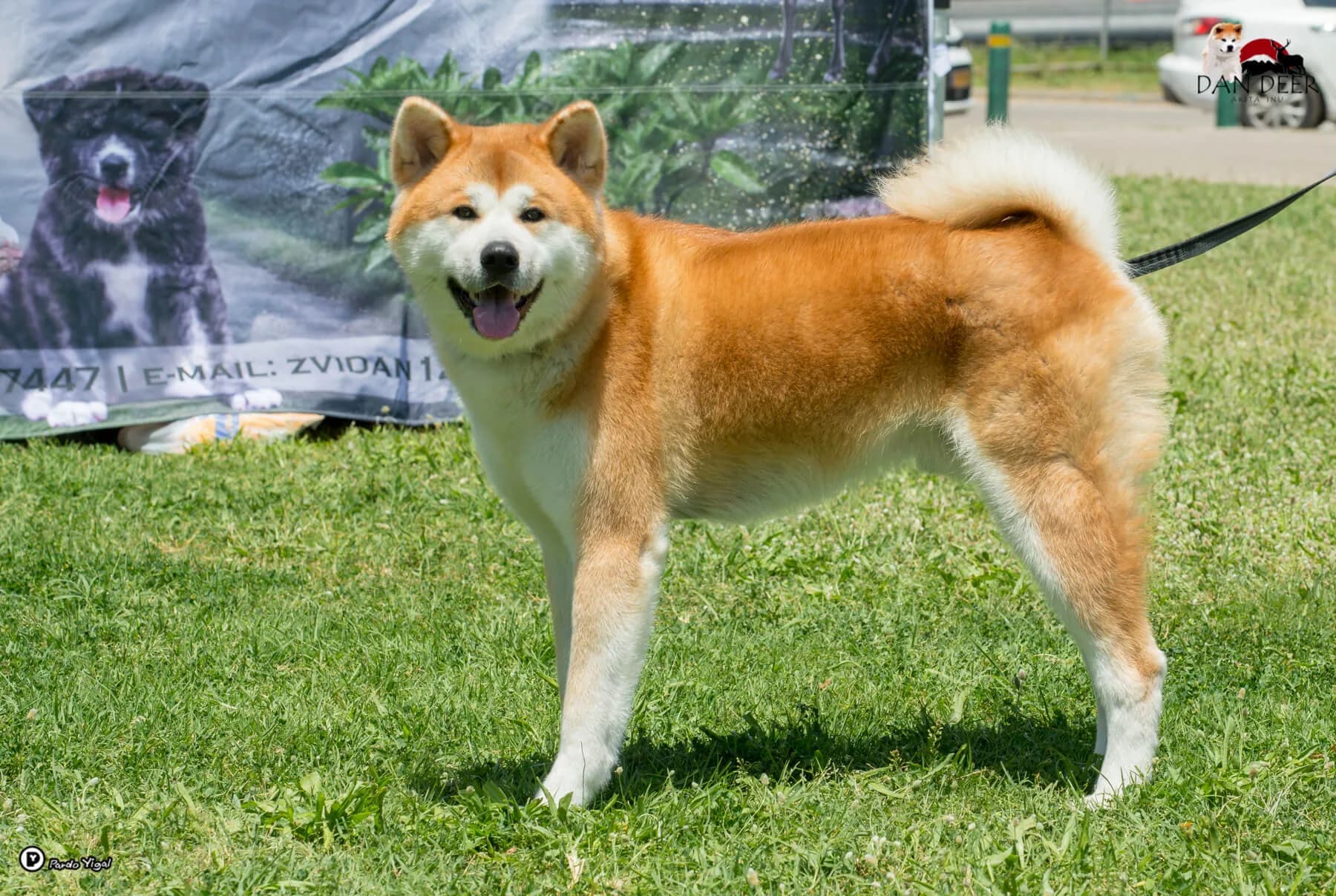
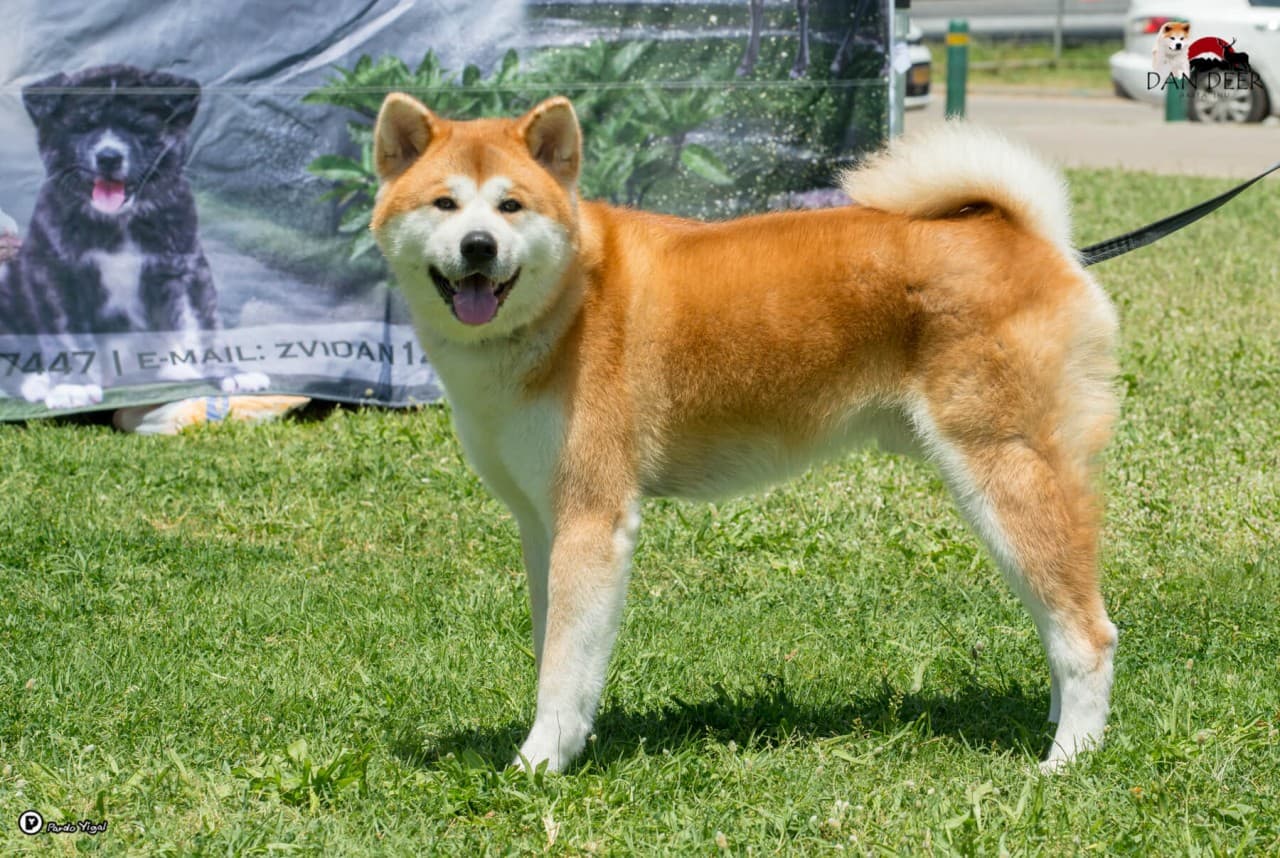
The origin of the standard and the history of the breed
FCI Standard No. 255/ 02.04.2001 Akita
Country of origin: Japan
Publication date of valid original standard: 13.03.2001
Use: companion dog
FCI Classification: Group 5 Spitz and Primitive Dogs Part 5 Asiatic Spitz and Similar Breeds
Does not require a work test
History of the breed in brief: Originally, there were small to medium sized dogs in Japan and no large dogs. Since 1603, in the Akita region, Akita metagi dogs (medium-sized bear hunting dogs) have been used as fighting dogs. From 1868, Akita Matagi dogs were crossed with Tosa and Mastiff dogs. As a result, the dimensions of the breed were increased but the characteristics associated with the Spitz type were lost. In 1908, dog fighting was banned, but the breed was nevertheless preserved and improved as a large Japanese breed. As a result, nine excellent dogs of the breed were declared "national value" in 1931. During World War II (1939-1945), dog hair was used for military uniforms. The police ordered to capture and confiscate all the dogs except for a German shepherd that was used for military purposes. Some breeders tried to circumvent this directive by crossbreeding their dogs with German shepherds. At the end of the Second World War, the number of Akita dogs was greatly reduced and it was possible to find three distinct types: 1) Akita dogs; 2) fighting dogs of the Akita type; 3) Akita shepherds. A most confusing situation has arisen in the breed. During the restoration process of the pure breed after the war, a "Kongo-Go" dog of Deva lines was used, which exhibited Mastiff and German Shepherd traits. However, the learned breed enthusiasts decided that this type is not a real Japanese breed and made an effort to remove the foreign breeds from breeding by crossing with Akita breeds, with the aim of restoring the original pure breed. They managed to stabilize a pure bloodline of a great breed known today.
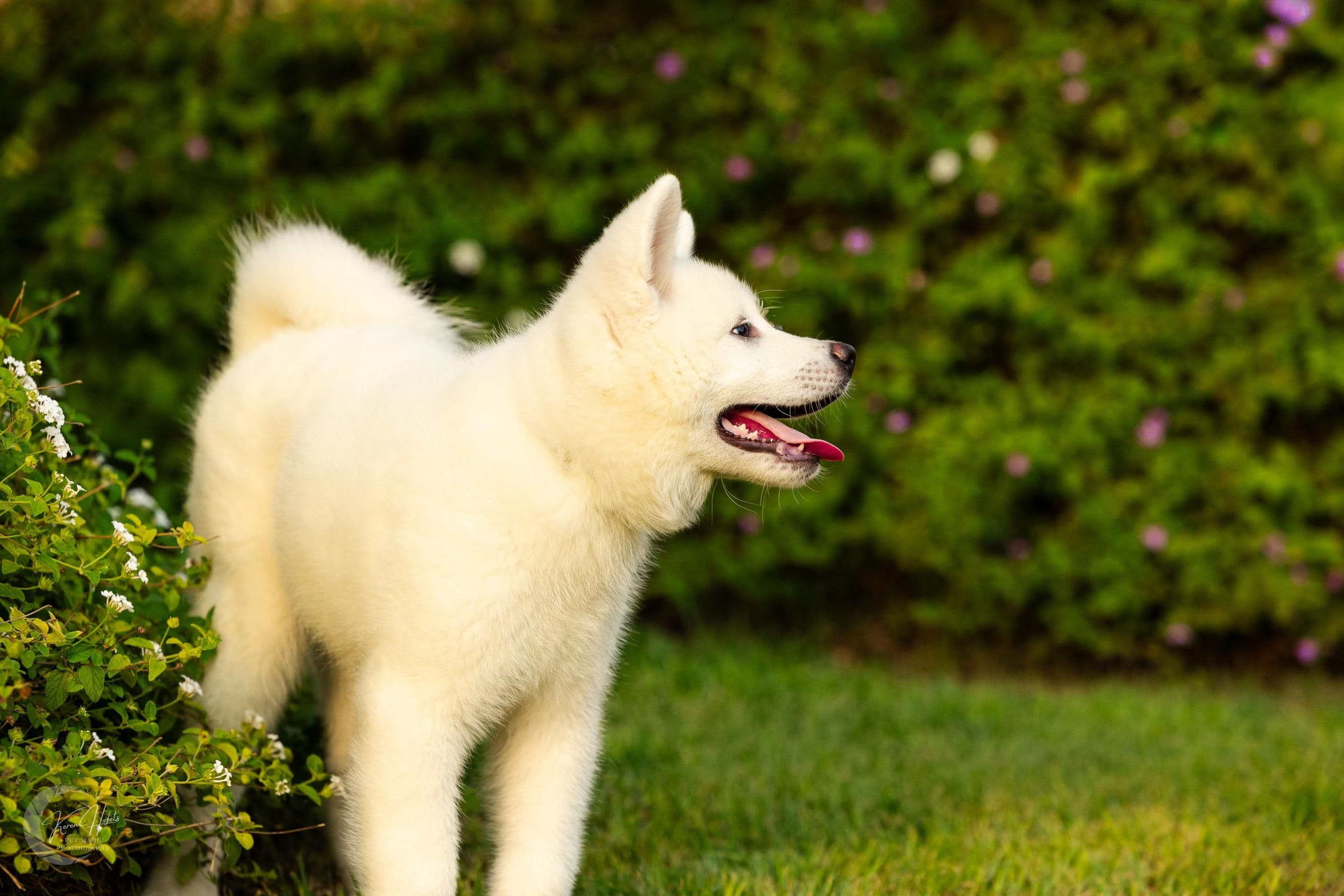
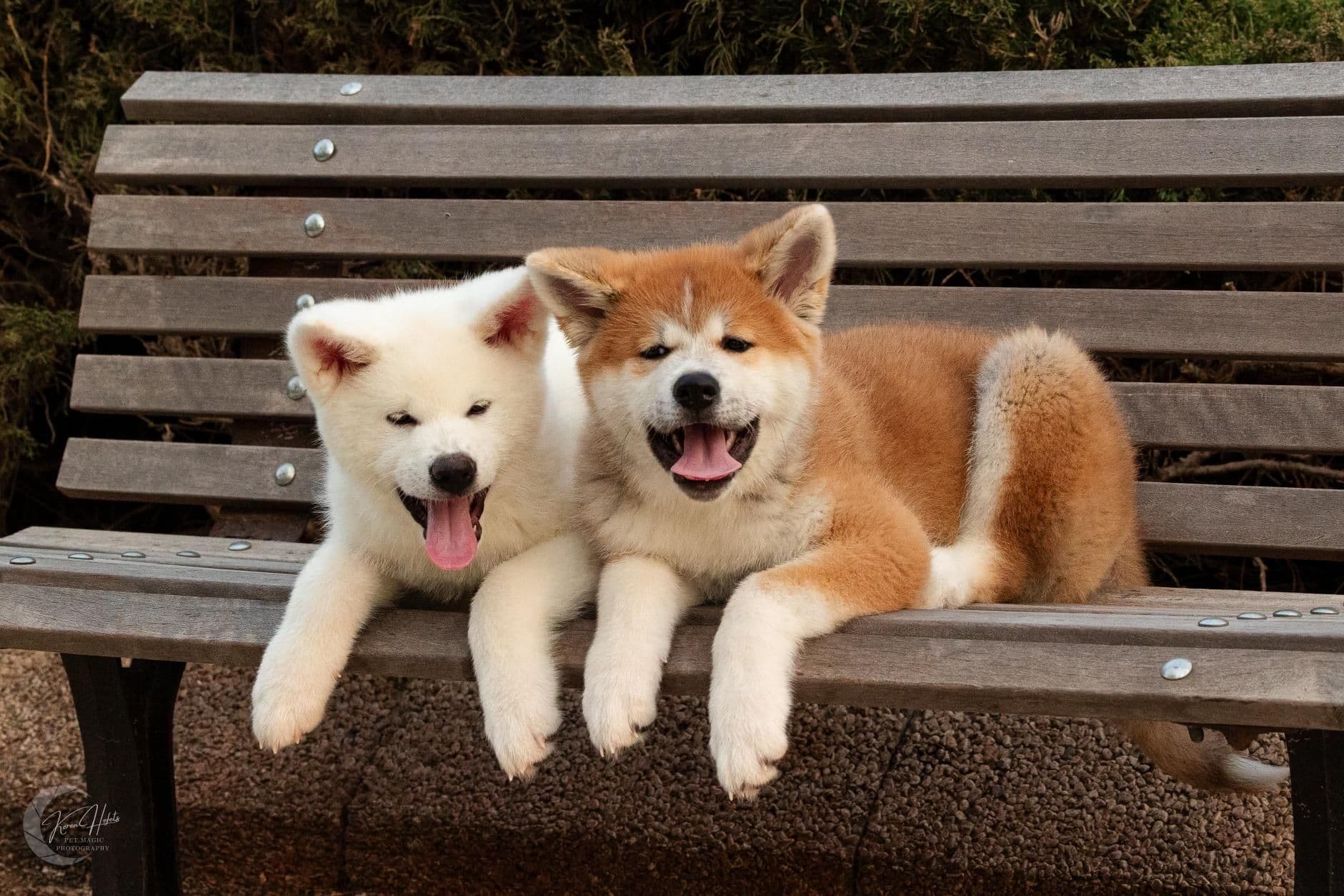
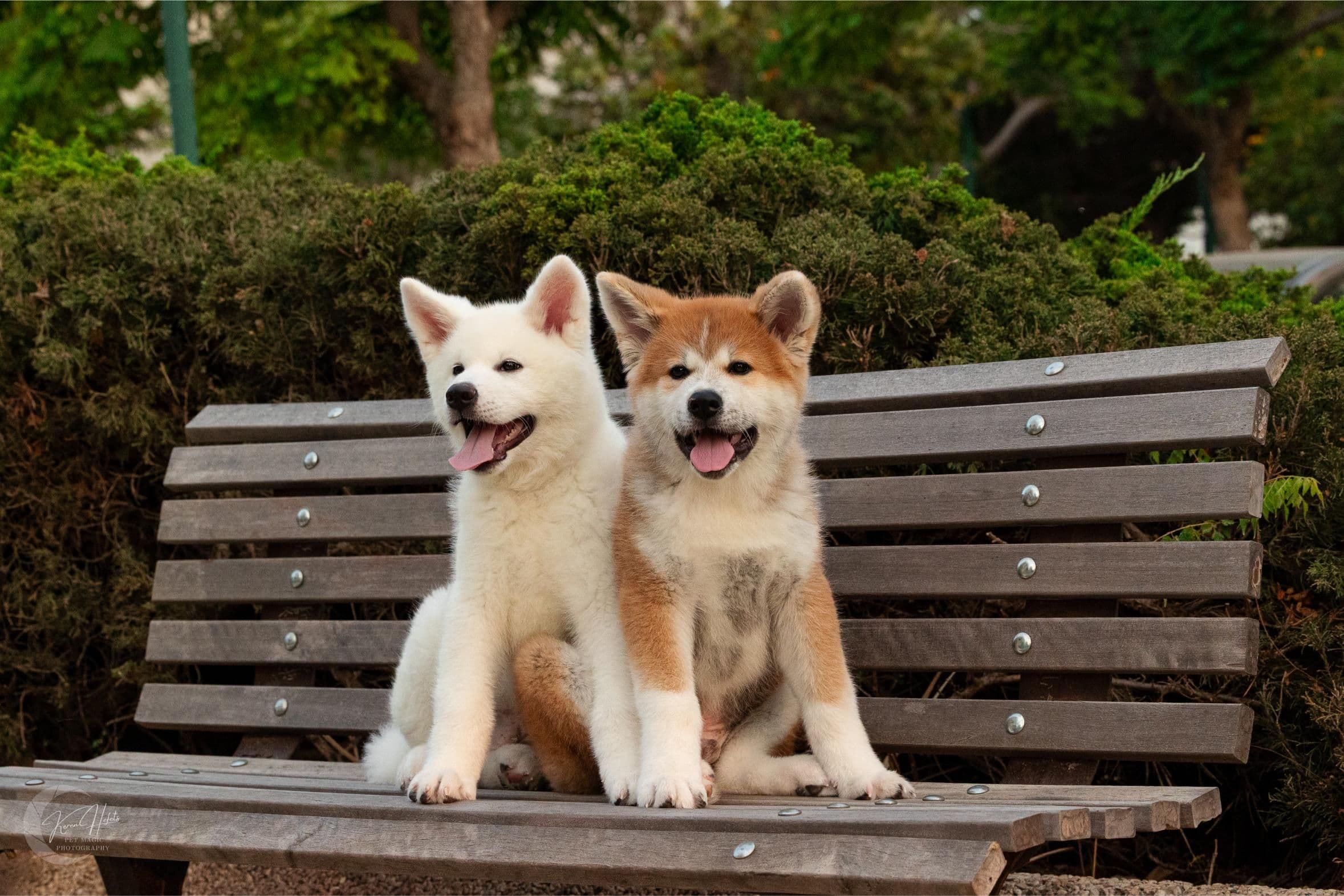
General appearance: a large dog, with a strong structure, well balanced, massive. Secondary gender characteristics are most obvious, noble and dignified, but humble. strong dog
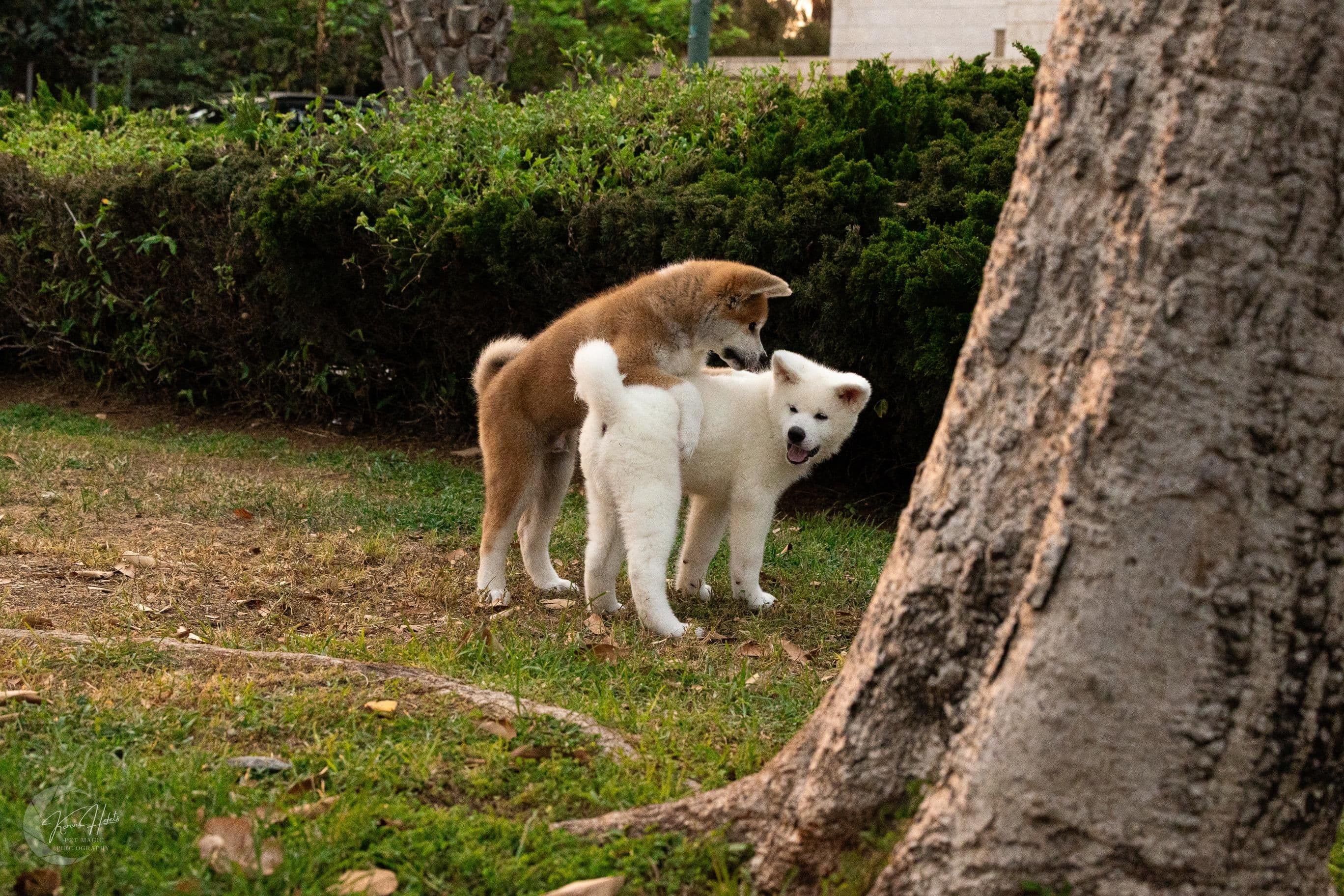
Behavior and character: The character is restrained, loyal, submissive and attentive.
Head Skull area Nose: large and black. Light and diffuse lack of pigmentation is acceptable in white dogs only, but black is the preferred color in any case.
General appearance and character
Muzzle: Moderately long, strong, with a wide base, tapering but not pointed. The bridge of the nose is straight.
Jaws/Teeth: Strong teeth with scissor bite.
Lips: tight to cheeks: moderately developed
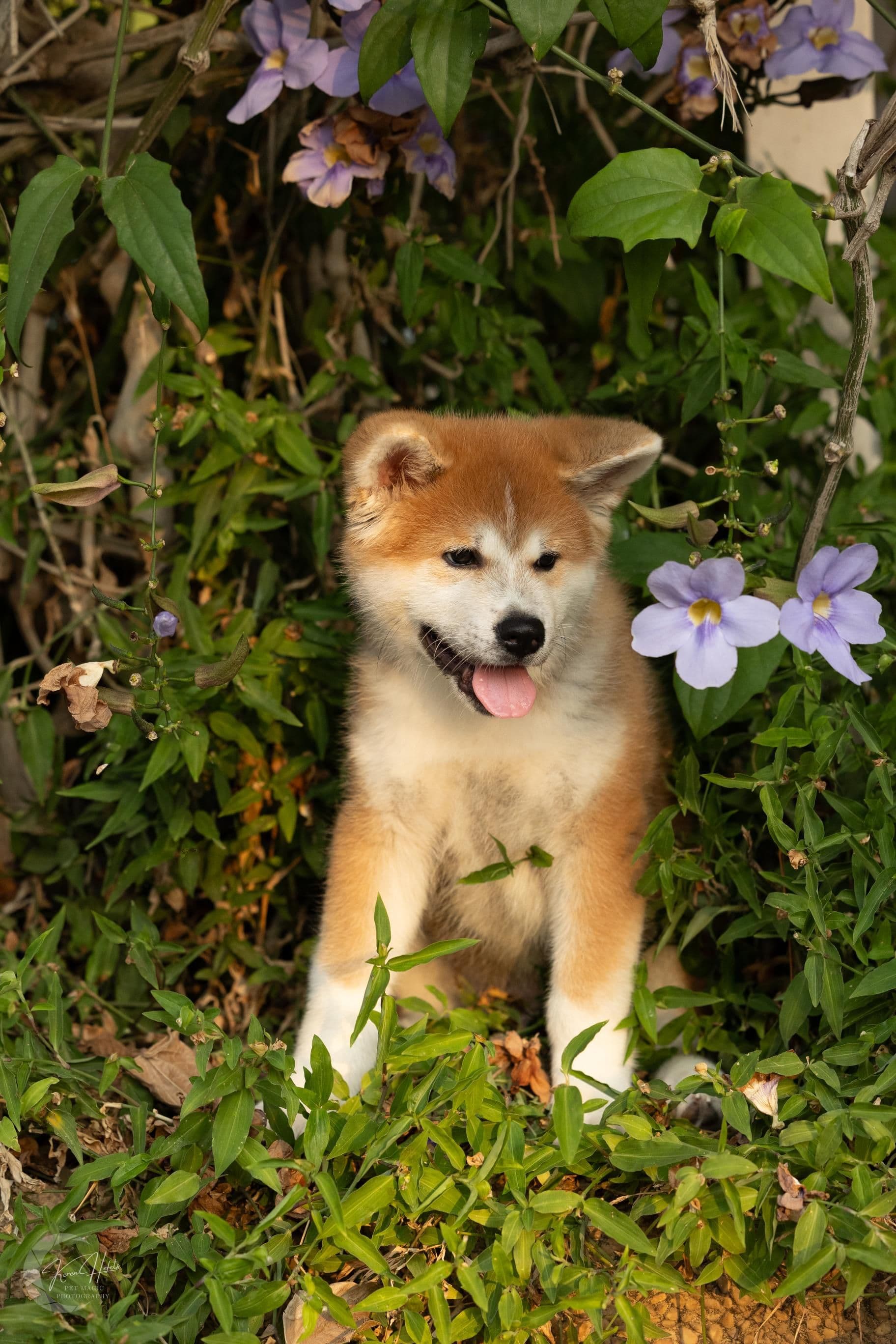
Eyes: quite small, almost triangular in shape due to the rise of the corner of the outer eye, located at a medium distance from each other,
Dark brown color: preferably as dark as possible.
Ears: rather small, thick, triangular, with a slightly rounded tip, placed at a medium distance from each other, erect and leaning forward.
Neck: thick and muscular, free of fema, balanced with the head.
Back body: straight and strong. Waist: wide and muscular
Chest: deep, front chest well developed, ribs with moderate stiffness Belly: well drawn upwards.
Tail: Set high, thick, carried well curled over the back, the tip almost reaching the ankle when pulled down.
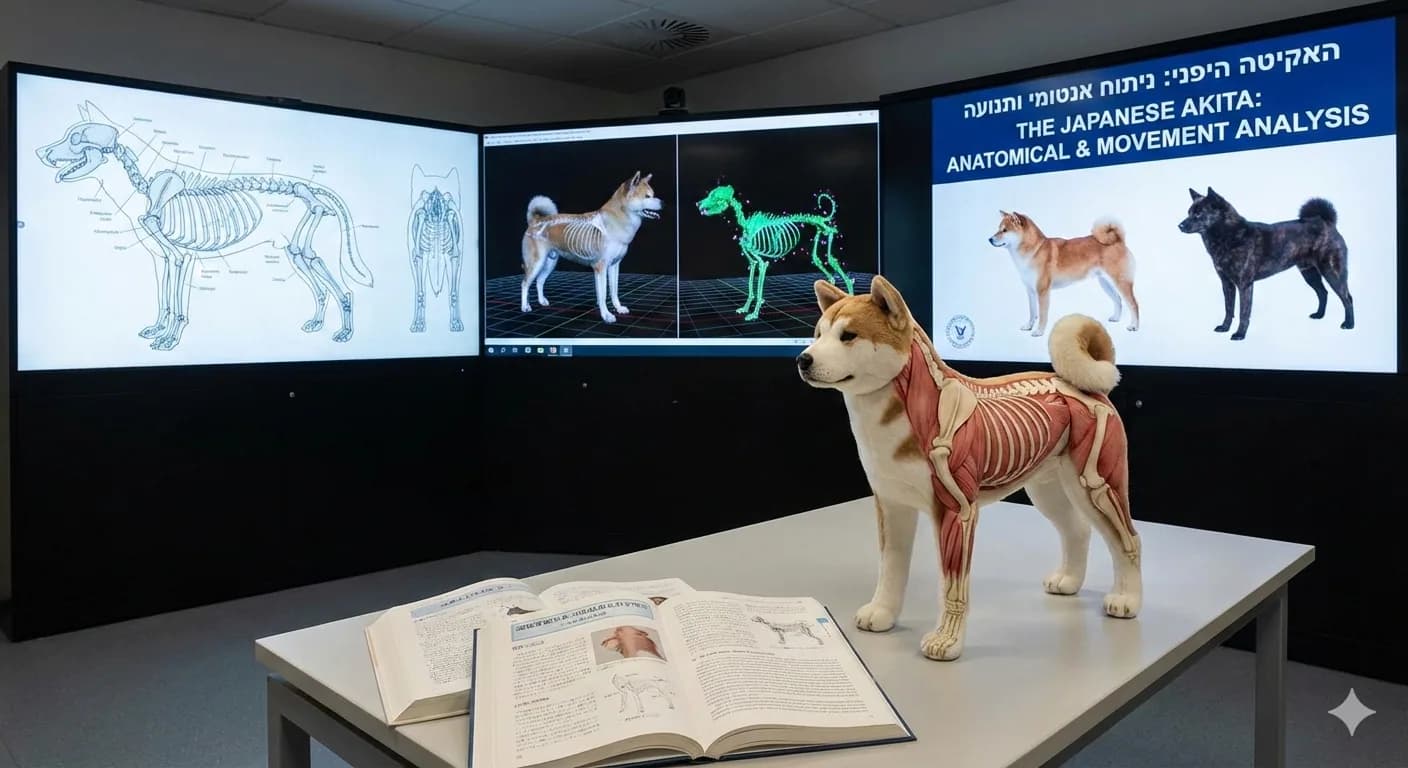
Head, body and movement
limbs
Forelimbs Shoulders: medium slope and well developed
Elbows: tight
Arms: Straight and heavy boned.
Hindquarters: Well developed, strong and moderately crooked.
Feet: thick, rounded, arched and gathered.
Movement: flexible and powerful movement.
Hair coat: stiff and straight upper coat, soft and dense lower coat.
The shoulder blade and back are covered with slightly longer hair.
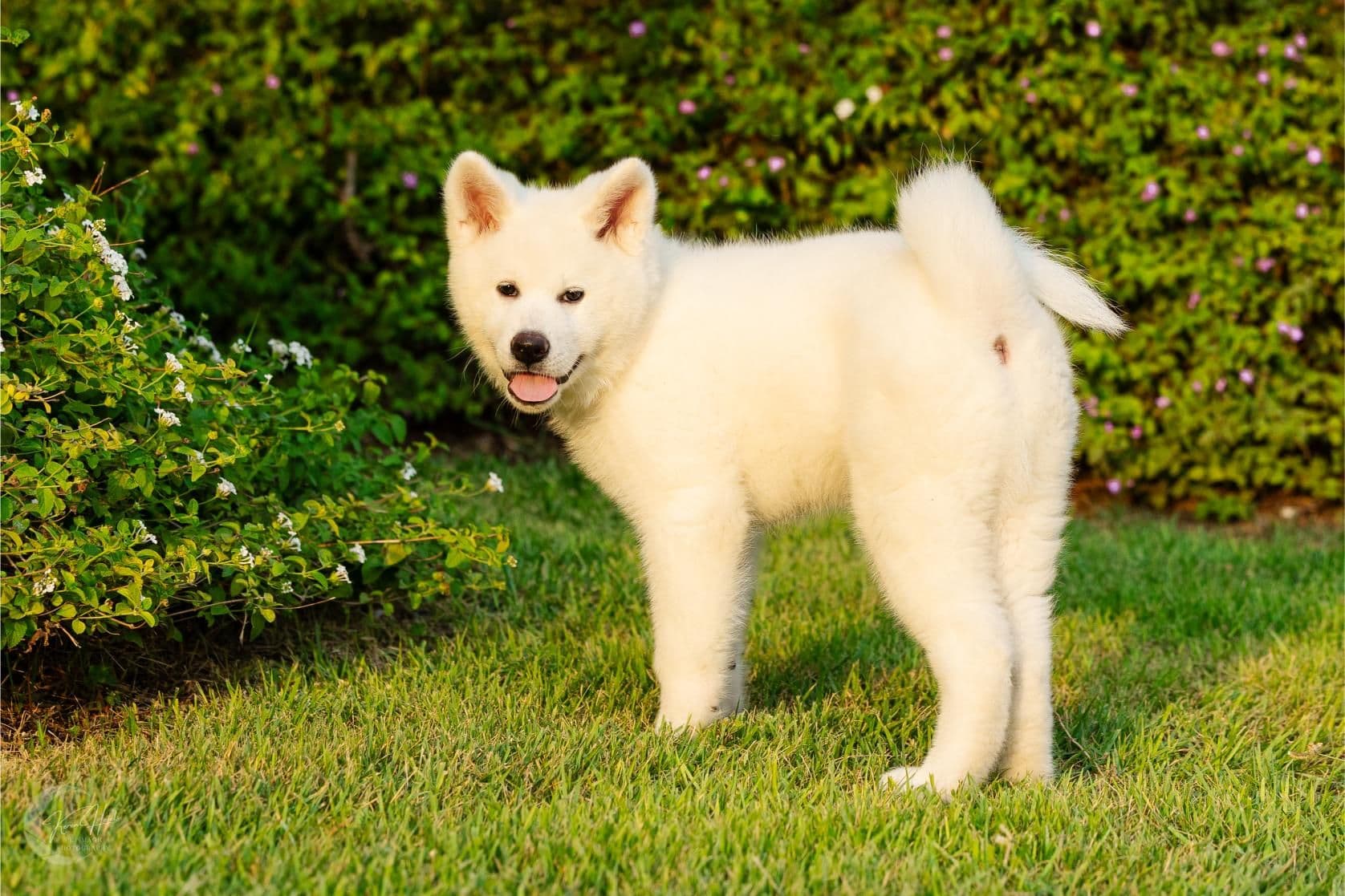
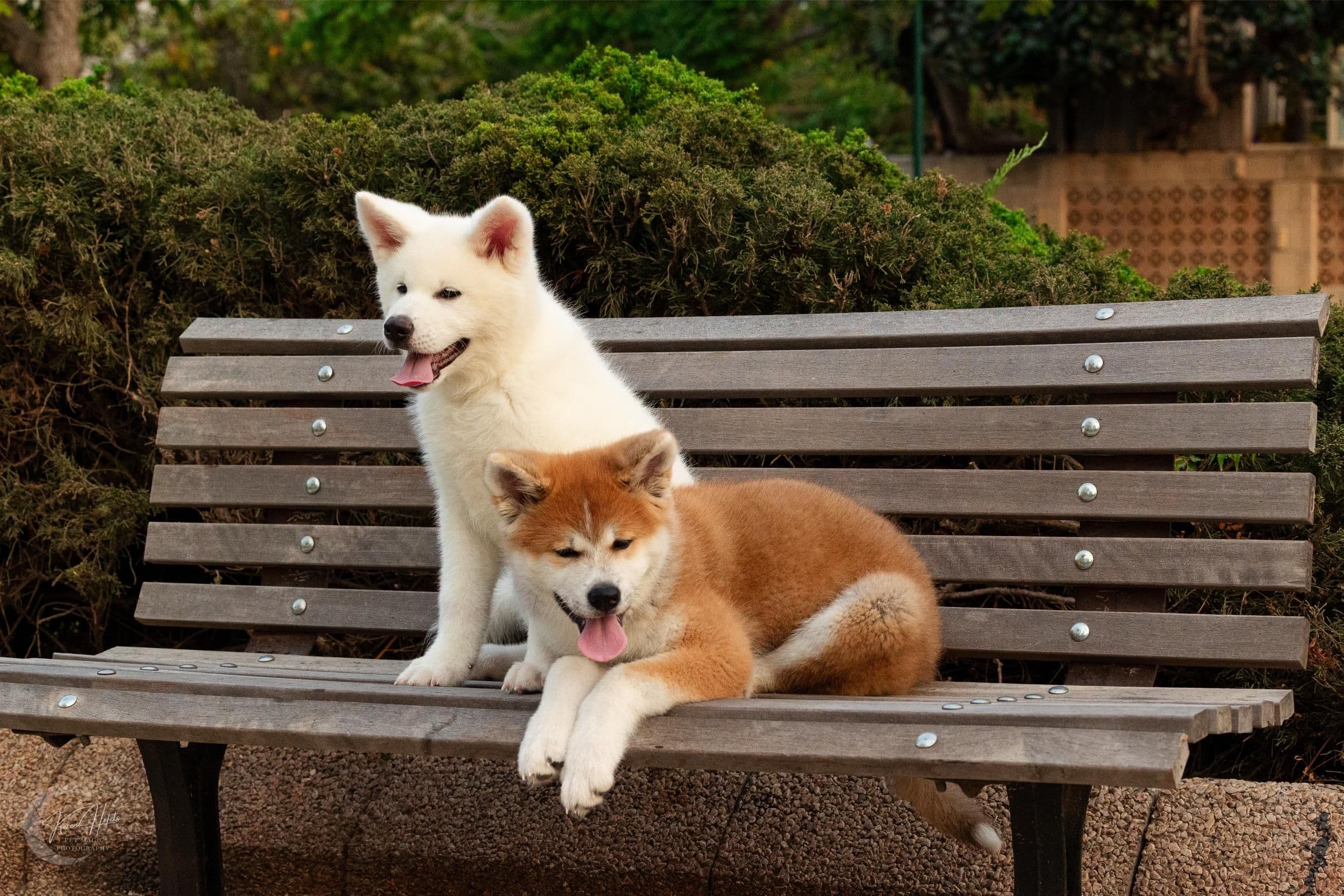
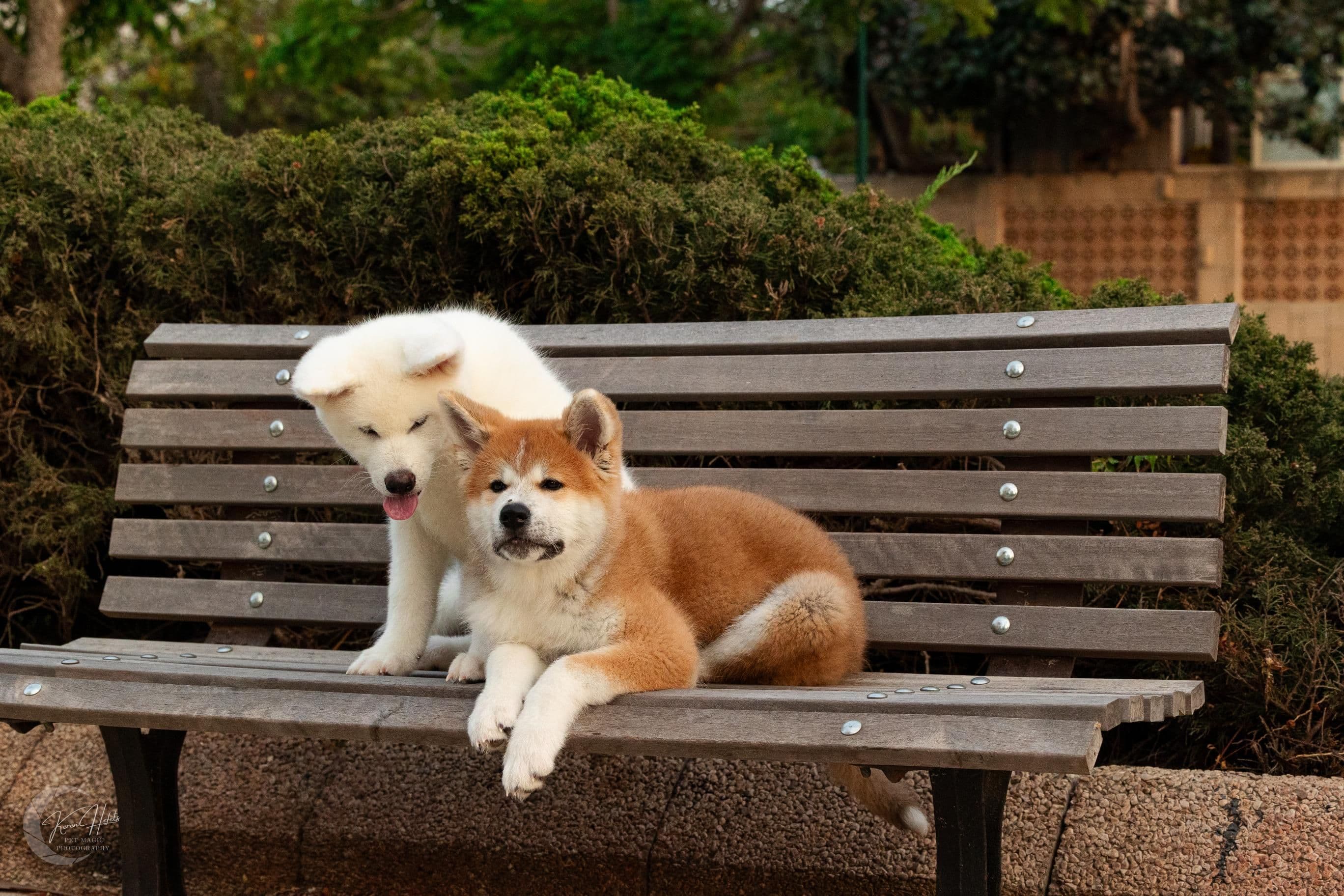
The hair on the tail is longer than on the rest of the body. Color: red-brown, sesame (red hair with black tips), spotted and white.
Fur, colors and sizes
All the above colors except white must be "orjiro". (Orjiro - whitish fur on the sides of the muzzle, cheeks, lower part of the jaw, neck, chest, body and tail, and on the inside of the legs.)
Measurements: Shoulder height: Males 67 cm Females 61 cm There is a gap of 3 cm above or below.
Errors: Any deviation from the above specification will be considered an error and the severity with which the error should be treated is in direct proportion to its degree and its effect on the dog's health and well-being.
* Female dog/ male dog
* A chin or nasal bite
* Lack of teeth
* Blue tongue or with black dots
* Bright eyes
* Short tail
Dismissing errors:
Why is the standard important when choosing a puppy?
* Very aggressive or cowardly
* Ears not erect
* Drop tail
* Long fur
* Black mask
* Spots on a white background
Any dog that clearly exhibits physical and behavioral abnormalities will be disqualified.
PS: Males need two normal looking testicles that have fully descended into the scrotum.
before making a decision
If you are debating whether an Akita Inu is suitable for your home, it is recommended to talk to a breeder who knows the breed in depth. A correct match between the dog and the family is just as important as external appearance or certificates.