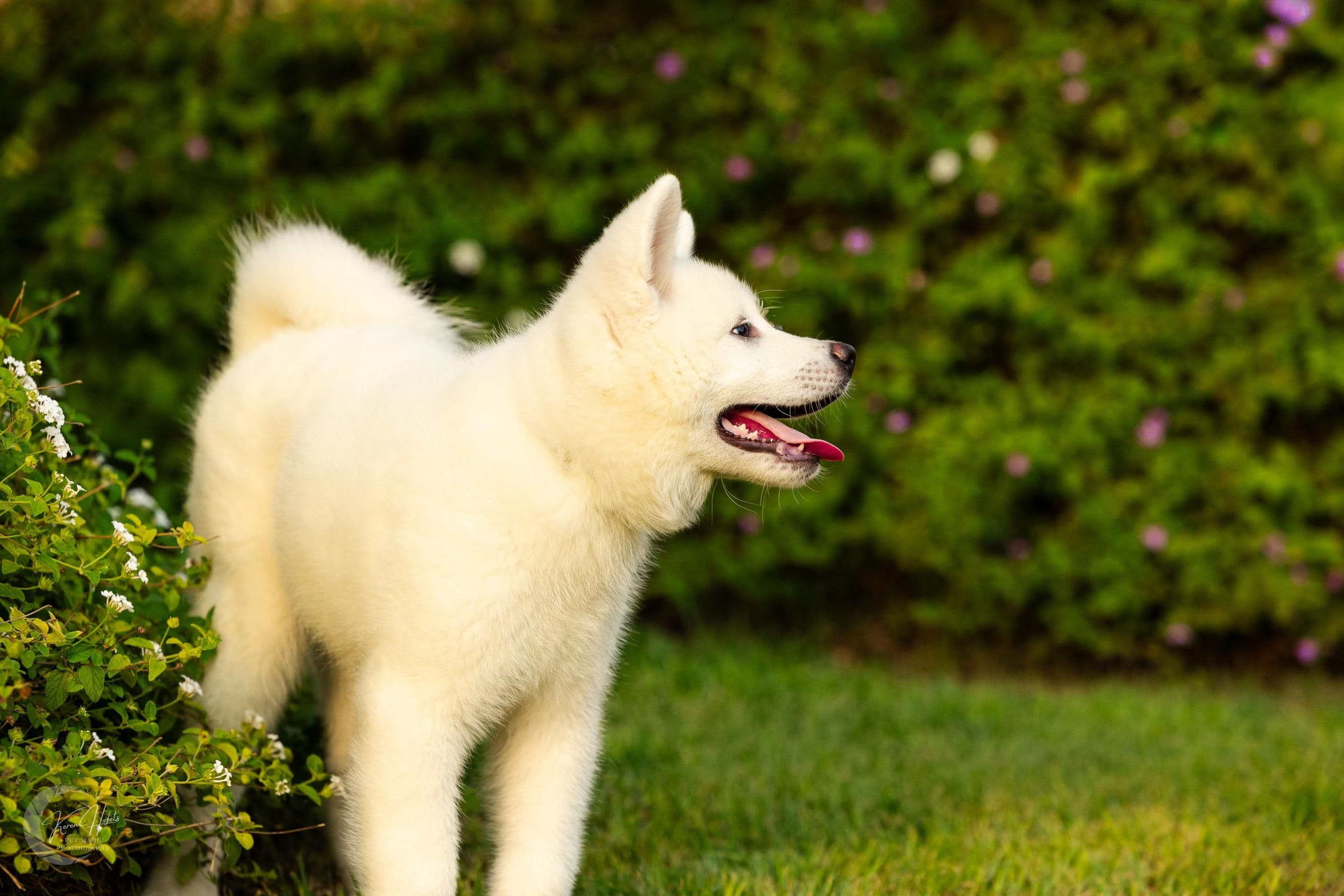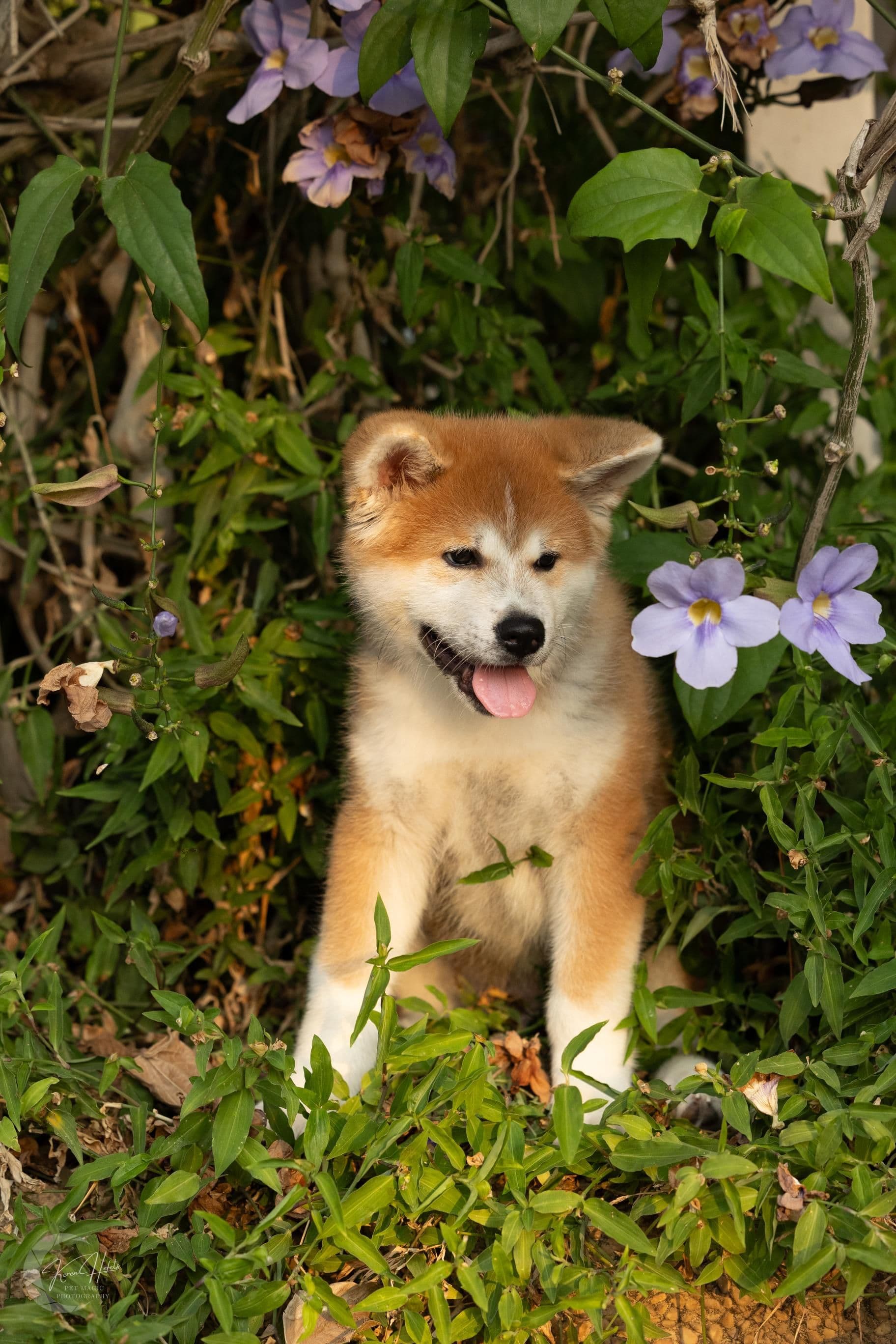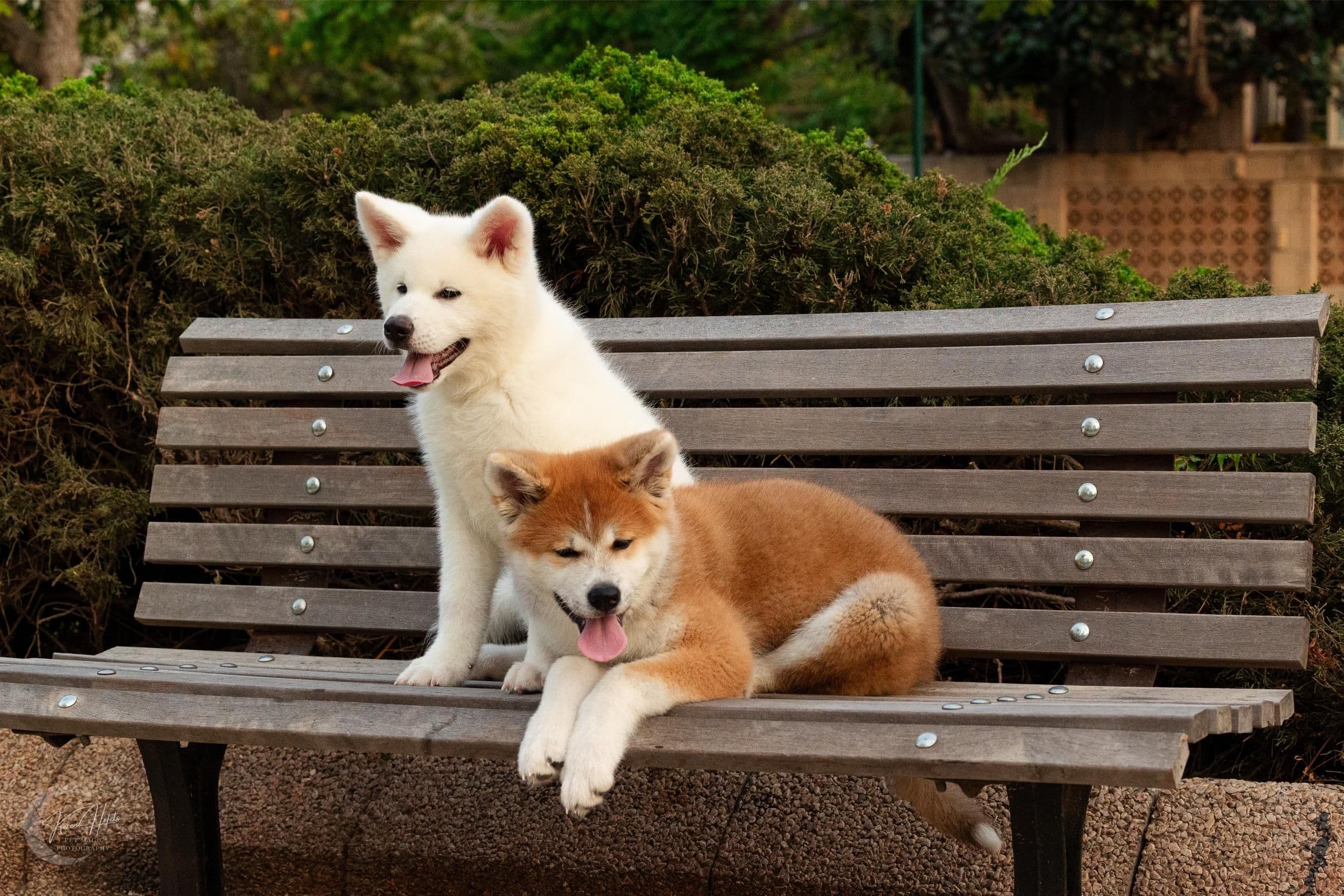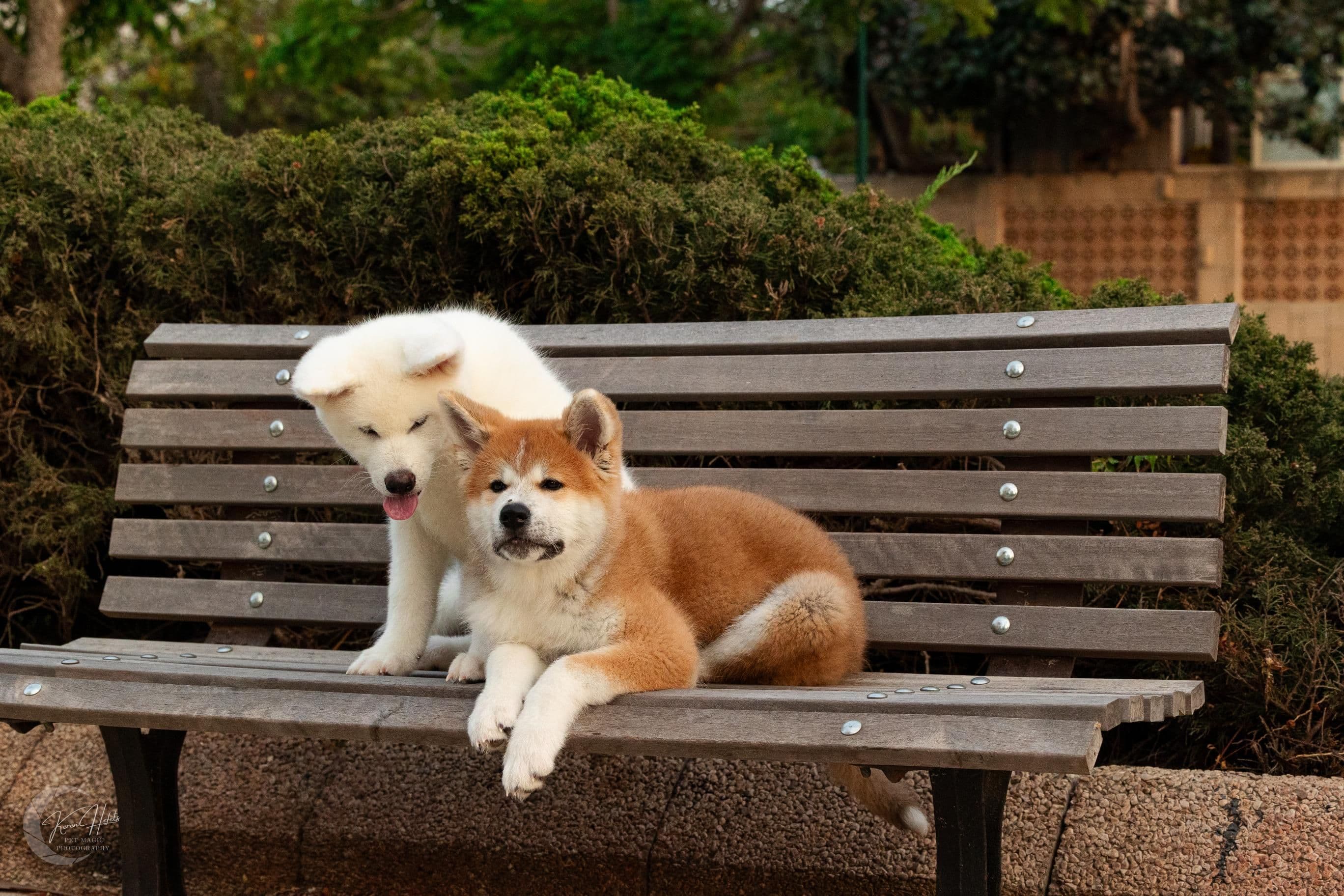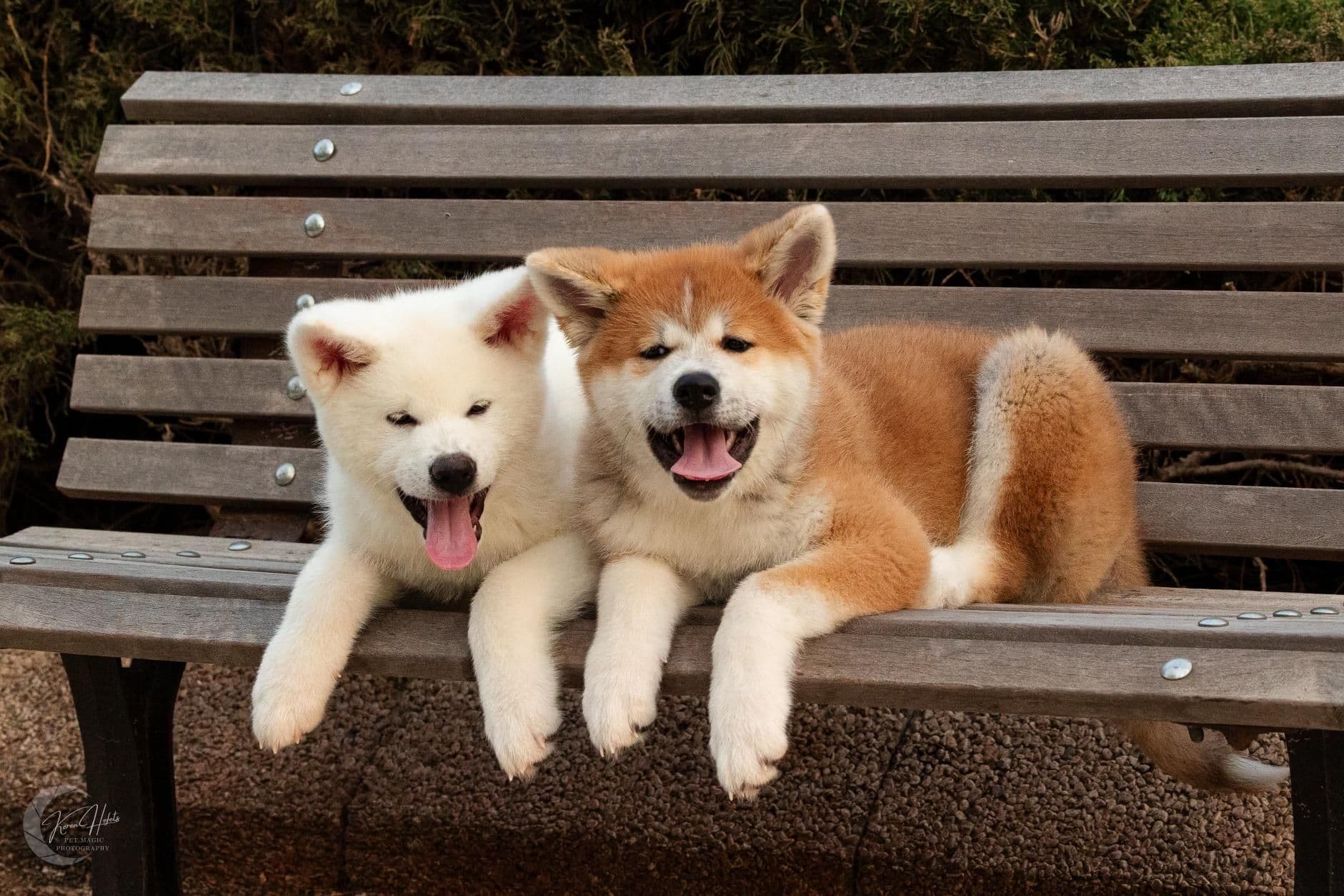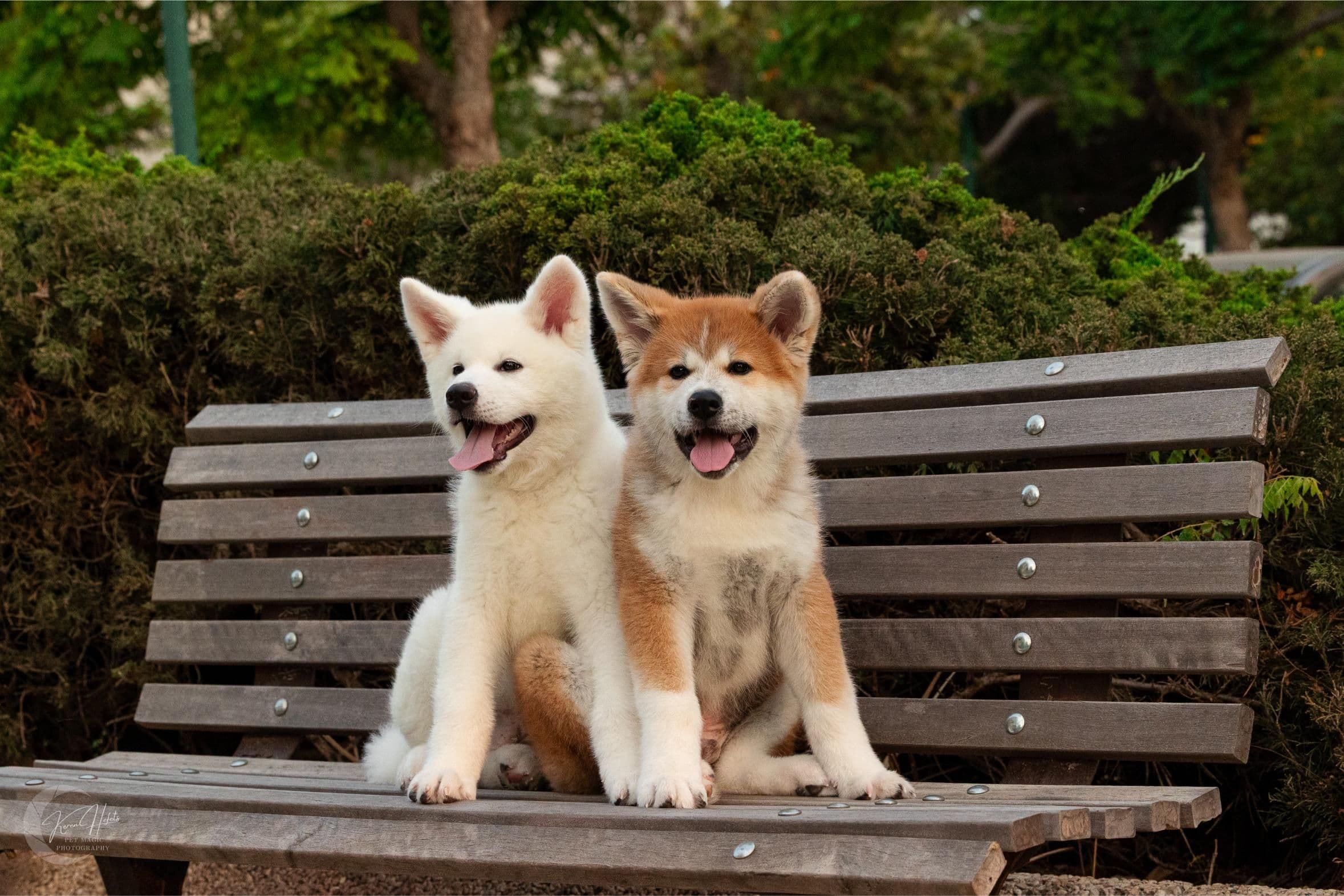
The Japanese Akita has two layers of coat: an outer coat and an undercoat. Seasonal shedding affects the undercoat. The outer coat behaves much like human hair: individual hairs shed continuously and are replaced by new ones, usually without us noticing.
Shedding the undercoat is a synchronized seasonal coat change. It is neither a genetic defect nor a problem that needs, or can be, fixed. Hormones triggered by changes in day length govern this change. Because double-coated breeds have a complex follicle structure, shedding can make it seem as though the whole dog is coming apart at once.
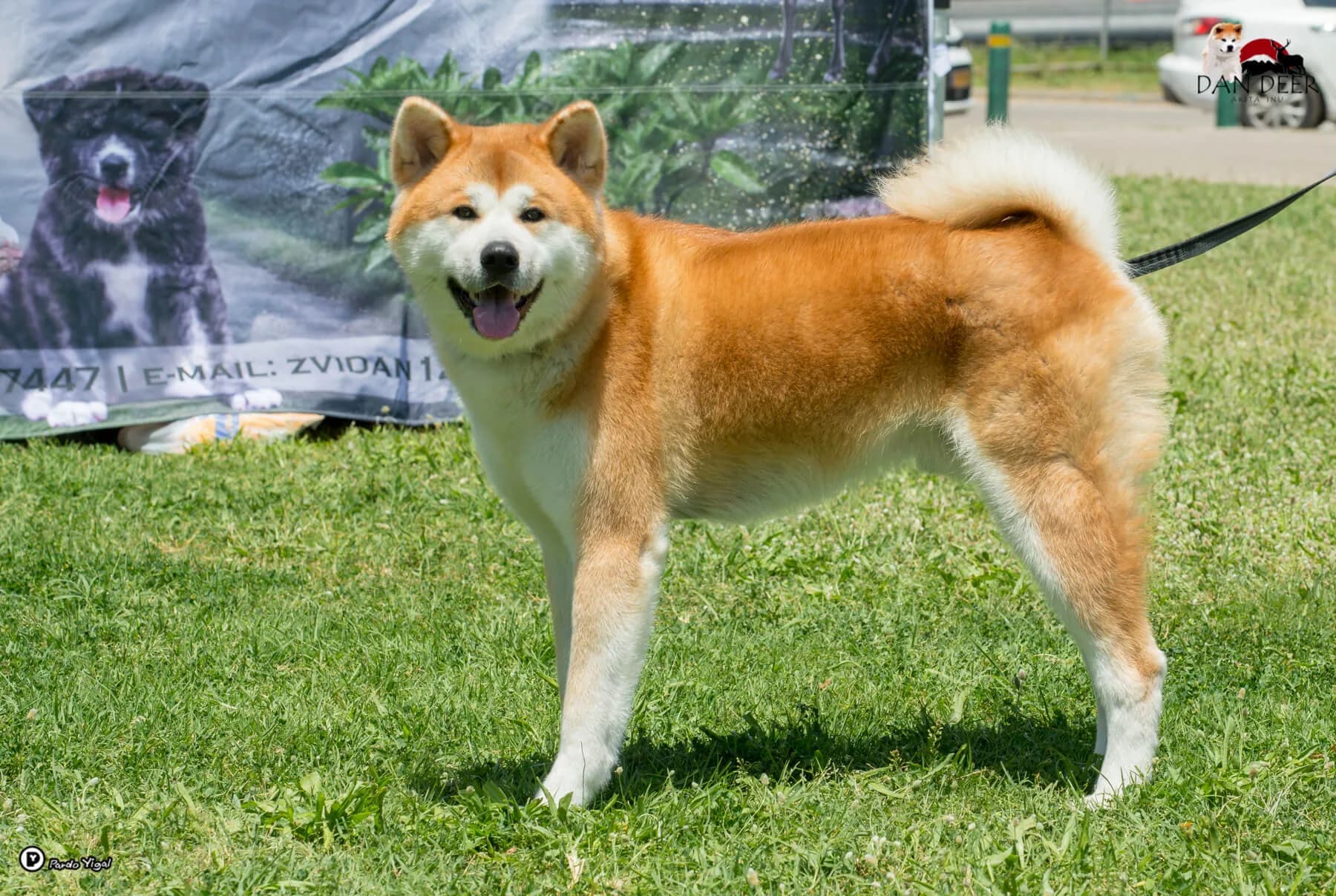
In double-coated dogs, each opening in the skin contains one primary hair follicle, alongside a cluster of secondary follicles that produce undercoat hairs. The Akita's outer coat is relatively short, coarse, straight, and stands away from the body. As a result, the loose undercoat protrudes in tufts and can be pulled out easily. In Akitas, many follicles tend to shed in a short, synchronized cycle. The effect looks especially dramatic because it usually takes place over just two to three weeks.
Hair has a four-stage life cycle:
- Anagen: active growth.
- Catagen: a brief regression of the follicle.
- Telogen: rest, when a dead hair remains anchored in its follicle.
- Exogen: active release of the hair, usually after the next anagen phase has already begun beneath it.
The shedding process is under hormonal control:
- Photoperiod (day length) is the main seasonal signal. Light received by the retina affects melatonin secretion. Changes in melatonin influence prolactin levels, which help time the coat change.
- T4, a hormone produced by the thyroid gland, is needed for entry into the anagen phase.
- Female dogs often shed heavily after a heat cycle or giving birth. The sharp drop in progesterone and estrogen synchronizes entry into telogen.
- Elevated cortisol, usually associated with stress, inhibits anagen. A particularly stressful event can cause unusual shedding.
Air conditioning, artificial lighting, and warm, sunny winters can blur seasonal signals. The result may be a longer, less synchronized shedding period.
Regrowth requires plenty of protein and zinc. A small number of dogs are prone to zinc-responsive dermatosis, a skin condition associated with zinc deficiency that can affect the quality of the new coat. Only a veterinarian can diagnose the condition; treatment usually involves zinc supplementation. Separately, growing puppies can become zinc deficient if their food contains too little zinc or interferes with zinc absorption. Excess calcium, often from unnecessary supplements, is one possible cause.
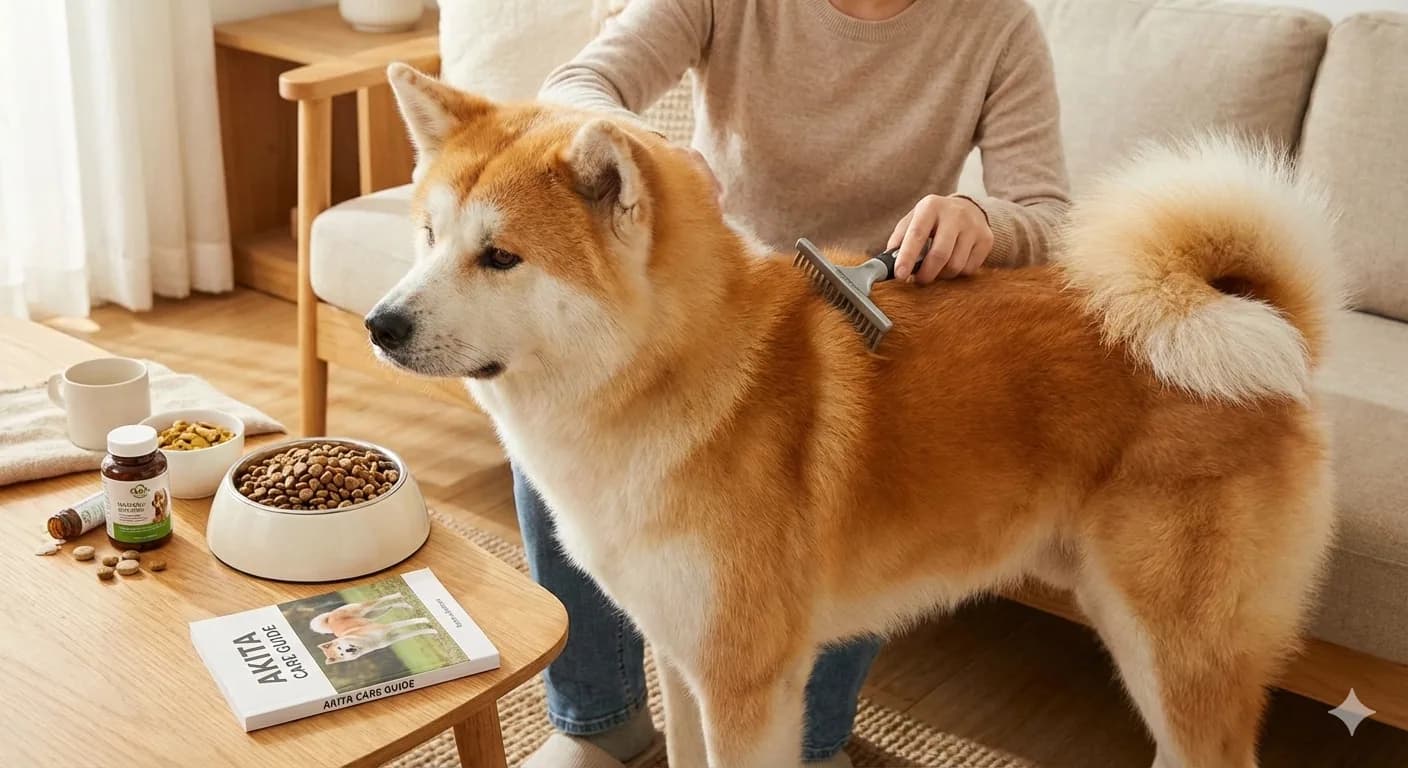
In short, shedding is natural, healthy, and unavoidable. We manage it by brushing the dog and cleaning the house. Intensive combing during a coat change does not speed up the biological process; it simply removes undercoat hairs that have already entered exogen but are still caught among the other hairs.